Nic salt shot: what is actually inside the bottle
British online shelves line up dozens of small 10 ml bottles, all labelled almost identically. Very few product pages explain what they actually contain, or why a nic salt shot differs from a plain freebase one. That gap matters more than it looks, because this tiny bottle rewrites the composition of the whole shortfill it is poured into.
Nic salt shot: the exact contents of the bottle
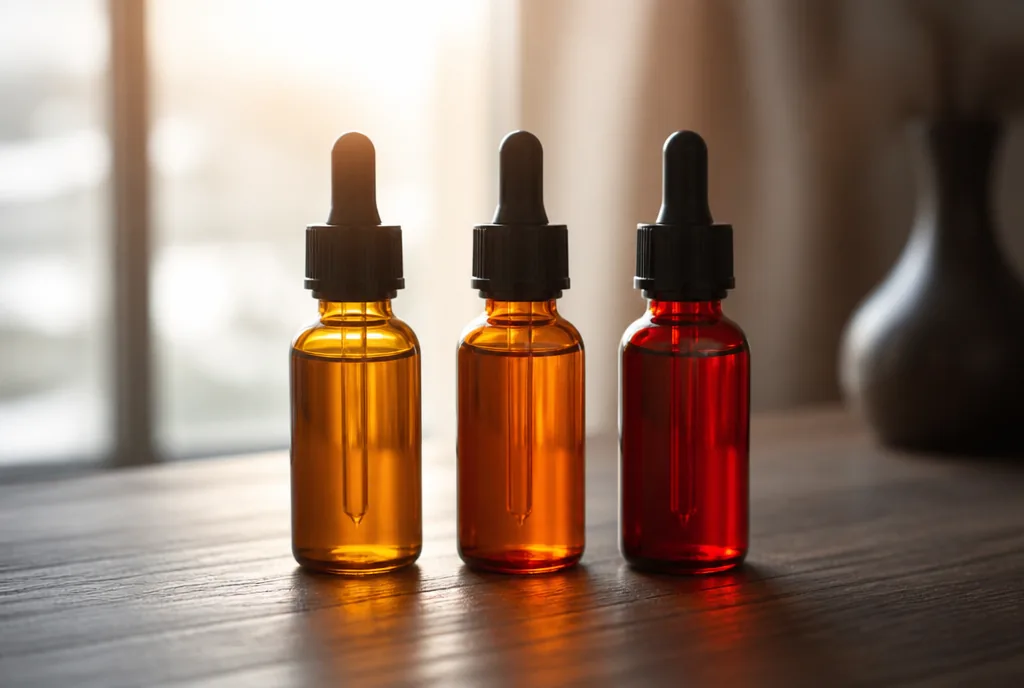
A nic salt shot is a 10 ml bottle of unflavoured base liquid, heavily loaded with nicotine in its protonated salt form, most often at 18 or 20 mg per millilitre. A 20 mg/ml bottle therefore carries 200 mg of nicotine in total, and an 18 mg/ml bottle carries 180 mg.
Three ingredients make it up and no more: propylene glycol, vegetable glycerine, and nicotine bound to an organic acid. No flavourings, no sweetener, no mouthfeel additives at all.
That flavourlessness is not an oversight. It is the entire condition of the product’s use, since anything it added in taste would clash with the shortfill it is meant to disappear into.
The carrier base, and why its ratio is printed
The propylene glycol and vegetable glycerine in the bottle do no work on the nicotine itself. They exist to carry it, to dilute it down to a handleable strength, and to match the liquid it will join.
British retailers stock two ratios almost exclusively, 50/50 and 70/30 VG. The choice is not cosmetic: pouring a 50/50 shot into a high VG shortfill shifts the finished ratio, and the more shots you add, the further it moves.
On a single shot in a 100 ml bottle the shift is small enough to ignore for most people. On two or three shots it becomes measurable, and matching the shot ratio to the shortfill is the simplest way to keep the base you paid for.
Nicotine and its acid, the part that defines the product
The distinguishing ingredient is the acid. Freebase nicotine is alkaline; adding an organic acid, benzoic acid being the most common in commercial production, transfers a proton to the nicotine molecule and produces a salt.
That protonated form is what the label means by nic salt. It sits at a lower pH than freebase nicotine at the same strength, which is why the same milligram figure does not feel the same in the throat between the two forms.
The acid quantity is not a free variable. It is set by the chemistry of the reaction, not chosen for taste, and it is the one component you will rarely see quantified on a British label.
Why every nic salt shot is 10 ml and never larger
The bottle size is a legal artefact, not a commercial one. Under the rules in force in the United Kingdom, e-liquid containing nicotine cannot be sold in containers larger than 10 ml, and cannot exceed 20 mg of nicotine per millilitre.
A nic salt shot is nicotine-containing e-liquid, so it falls squarely under both limits. That is the whole reason the shortfill format exists: the flavoured part is sold at 0 mg in a large bottle, which the rules do not cap, and the nicotine arrives separately in compliant 10 ml units.
The same rules cap refillable tanks at 2 ml and prohibit sale to anyone under 18. Together they shape almost every format decision British vaping shelves make.
18 mg or 20 mg: what the difference does
Both strengths are sold widely here, and the gap between them is not arbitrary. An 18 mg/ml shot is the older standard, chosen because it lands on round numbers in the most common bottle sizes.
Two 18 mg shots in a 100 ml shortfill give 360 mg spread across 120 ml, which works out at exactly 3 mg/ml. The same pair of 20 mg shots gives 400 mg across the same volume, or 3.3 mg/ml.
Nic salt shots skew towards 20 mg/ml because that is the legal ceiling and it lets a single bottle do more work in a small shortfill. Neither figure is a recommendation, only a starting quantity for a calculation.
Adding one without unbalancing the shortfill
The physical act is unremarkable and the mistakes around it are always the same. A 100 ml shortfill arrives in a 120 ml bottle with the headroom already measured out, so the shot goes in whole and the cap goes straight back on.
Shaking matters more than people expect. The salt-form liquid is denser than the flavoured base above it, and without a proper shake the first pours out of the bottle differ from the last.
What the addition displaces is worth naming. Adding 20 ml of unflavoured base to 100 ml of flavoured liquid dilutes the aromatics by roughly a sixth, which is precisely why shortfills are formulated over-flavoured at the point of sale.
What the label has to carry
British packaging on nicotine-containing e-liquid is prescribed rather than optional, and reading it tells you most of what a product page omits.
The nicotine concentration in mg/ml and the dose delivered must appear, alongside the ingredient list, the batch number and a health warning covering nicotine’s addictive nature. Child-resistant and tamper-evident closures are mandatory, as is a leaflet with handling instructions.
What the label will usually not tell you is which acid was used, or in what proportion. If that matters to you, the manufacturer’s own documentation is the only reliable route, and its absence is itself a signal about the product.
Nic salt shot against a freebase shot, ingredient by ingredient
Side by side, the two bottles differ by exactly one component. Both hold propylene glycol, vegetable glycerine and nicotine at the same declared strength; only the freebase version omits the acid.
That single absence changes the pH of the finished mix, and therefore the throat sensation at a given milligram figure, without changing how much nicotine is present. The arithmetic of dilution is identical for both.
It also means the two are freely interchangeable in the calculation, if not in the sensation. A shop that stocks both in the same strength is selling the same quantity of nicotine in two chemical dresses.
One practical consequence follows. Mixing a salt shot and a freebase shot into one bottle works chemically and the totals simply add up, but the resulting throat feel is genuinely hard to predict, since only part of the nicotine is protonated.
What to check before buying
Three details settle most purchases and none of them are about the brand. The declared strength, because 18 and 20 mg/ml sit side by side on the same shelf and are easily confused at a glance.
The base ratio, because a mismatched shot drags the finished liquid away from the ratio the shortfill was built around. And the expiry date, since nicotine oxidises over time and a long-stored bottle darkens and loses potency.
Buying from a British retailer also means the product has been notified to the regulator, which is the only practical guarantee that the strength printed on the bottle is the strength inside it.
Frequently asked questions
Is an expired nicotine shot unusable?
Not necessarily unusable, but no longer accurate. Oxidised nicotine darkens and the delivered strength drifts below the printed figure, so the calculation you base on the label stops holding.
Can I pour in half a bottle?
Yes, and it is a normal way to hit an intermediate strength. A graduated syringe is the only way to do it accurately, since bottle graduations are too coarse at that scale.
Does the mix need to stand before use?
Not for nicotine reasons. A thorough shake distributes it immediately; any resting period people describe relates to flavour development in the base, not to the nicotine itself.
Does a salt shot keep better than a freebase one?
Broadly yes, on the same storage conditions. The protonated form is chemically more stable and oxidises more slowly, though heat and light still degrade both.
Why are some shots sold as 100 percent VG?
To let people nicotinate a high VG shortfill without pulling the ratio down. They are a niche product in Britain, where 50/50 and 70/30 dominate the shelves.
The short version on nic salt shots
A nic salt shot is three ingredients and one legal constraint: a neutral 10 ml carrier base, nicotine, an organic acid, and a 20 mg/ml ceiling that dictates the entire shortfill format around it. Everything else, the ratio choice and the strength choice, follows from what you are pouring it into rather than from the bottle itself. Reading the strength, the ratio and the date before buying removes most of the ways this goes wrong. If you want the arithmetic rather than the chemistry, our nic salt shot chart sets out the resulting strengths volume by volume, the difference between nic salt and freebase nicotine covers the acid question in depth, and the 100 ml e-liquid with nicotine piece explains what the large bottle actually holds before you open it.
Independent editorial content for adults only. Vaping products contain nicotine, which is a highly addictive substance. Not for sale to under-18s in the United Kingdom. This article is not a buying recommendation.